
Introduction
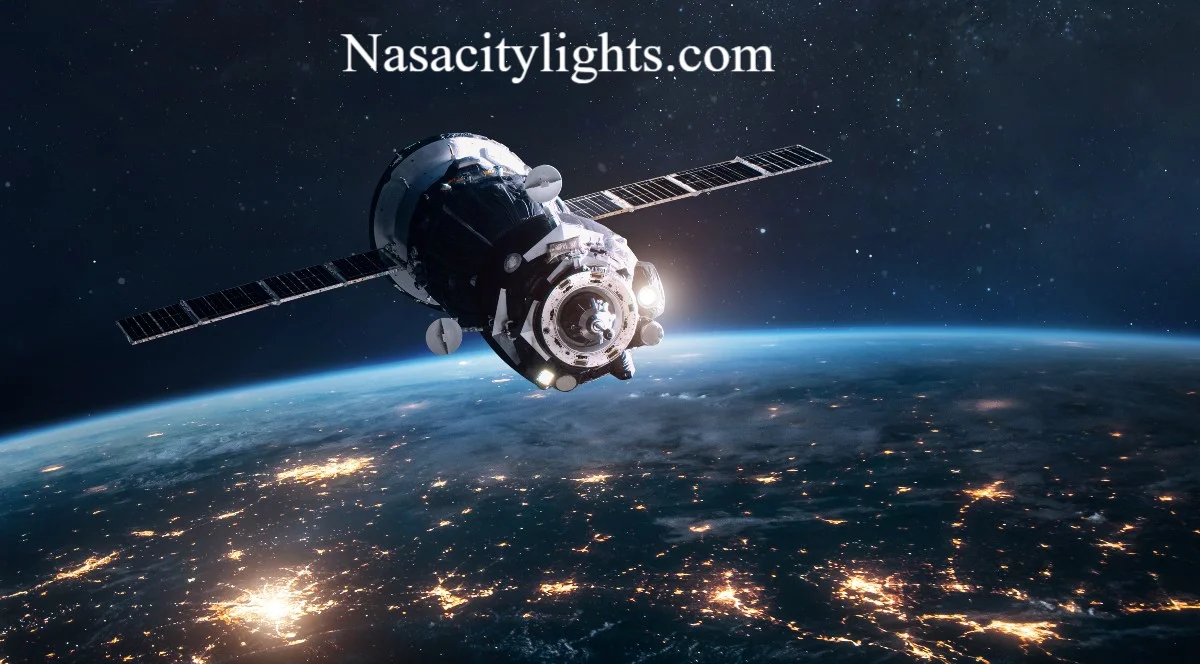
Have you ever looked up at the night sky and spotted a fast moving light gliding across it? That was likely a satellite, and there is a good chance it was cruising through Low Earth Orbit. So what is Low Earth Orbit exactly, and why does almost every major space mission depend on it?
In simple terms, Low Earth Orbit, often shortened to LEO, is the region of space closest to our planet. It sits just above the atmosphere, yet it plays a massive role in how we communicate, monitor weather, and even live in space aboard the International Space Station.
In this article, you will learn what Low Earth Orbit means, how high it actually is, why satellites love it, and how it compares to other orbits like MEO and GEO. You will also discover its benefits, its challenges, and why companies like SpaceX are racing to fill it with thousands of satellites.
What Is Low Earth Orbit in Simple Terms
Low Earth Orbit is the space region closest to Earth’s surface where objects can orbit the planet without falling back down or drifting away. Think of it like a racetrack that circles the globe, just a few hundred kilometers above your head.
Objects in this zone move fast enough to stay in a stable path around Earth thanks to gravity balancing their speed. This balance is what keeps satellites, space stations, and even space debris circling the planet instead of crashing into it.
You can think of LEO as Earth’s front porch in space. It is close enough for quick trips and easy communication, yet far enough to escape most of the atmosphere’s drag.
How High Is Low Earth Orbit
LEO typically ranges from about 160 kilometers to 2,000 kilometers above Earth’s surface. That might sound huge, but compared to other orbits, it is actually the nearest neighborhood in space.
Here is a quick breakdown to help you picture it.
- Below 160 km, atmospheric drag is too strong, and objects fall back quickly.
- Between 160 km and 2,000 km, satellites can maintain a stable orbit for years.
- Above 2,000 km, you enter Medium Earth Orbit, a completely different zone.
Most satellites you hear about, including the ISS, sit well within this range. The ISS itself orbits at roughly 400 kilometers, making it one of the most famous residents of LEO.
Why Satellites Are Placed in Low Earth Orbit
You might wonder why engineers choose LEO over higher orbits. The answer comes down to distance, cost, and performance.
Because LEO is so close to Earth, signals travel faster between satellites and ground stations. This reduces latency, which matters a lot for internet connections, video calls, and real time data.
Launching satellites into LEO also costs less fuel and money compared to sending them further out. Lower launch costs mean companies and governments can deploy more satellites, more often, and at a lower price.
LEO also offers a clearer view of Earth’s surface, which makes it perfect for imaging, weather tracking, and scientific observation. A satellite in LEO can capture sharp, detailed images because it flies so close to the ground.
How LEO Differs From MEO and Geostationary Orbit
Understanding LEO becomes much easier when you compare it with other orbits. Each orbit serves a different purpose based on altitude and speed.
Low Earth Orbit (LEO)
LEO ranges from 160 km to 2,000 km. Satellites here move quickly, often completing a full orbit in about 90 minutes. This orbit suits Earth observation, communication constellations, and crewed missions like the ISS.
Medium Earth Orbit (MEO)
MEO sits between 2,000 km and 35,786 km. It hosts navigation satellites, such as GPS. These satellites take several hours to complete one orbit, offering a balance between coverage area and signal delay.
Geostationary Orbit (GEO)
GEO sits at exactly 35,786 km above the equator. A satellite here matches Earth’s rotation, so it stays fixed above one location. This makes GEO ideal for weather satellites and broadcast television, though the distance causes noticeable signal delay.
In short, LEO gives you speed and clarity, MEO offers balance, and GEO provides constant coverage from a fixed spot.
Advantages and Limitations of Low Earth Orbit
Every orbit has strengths and weaknesses, and LEO is no exception. Knowing both sides helps you understand why this orbit is both popular and challenging.
Advantages
- Lower latency, which means faster communication and data transfer.
- Cheaper launch costs compared to higher orbits.
- Sharper images for Earth observation and mapping.
- Easier access for crewed missions and space station resupply.
Limitations
- Smaller coverage area per satellite, requiring large constellations for global reach.
- Satellites experience more atmospheric drag, which shortens their lifespan.
- Increasing congestion raises the risk of collisions.
- Frequent replacement is needed since LEO satellites do not last as long as GEO satellites.
I find this tradeoff fascinating. You get speed and clarity, but you also need many more satellites working together to cover the whole planet.
Common Missions in Low Earth Orbit
LEO is not just about internet satellites. It supports a wide range of missions that shape everyday life on Earth.
Earth observation satellites in LEO help track deforestation, urban growth, and natural disasters. Communication satellites support mobile networks, broadband internet, and emergency response systems. Weather satellites in this orbit monitor storms, temperature changes, and climate patterns with remarkable accuracy. Scientific research missions also use LEO to study cosmic radiation, microgravity, and even test new space technology.
How the International Space Station Operates in LEO
The International Space Station is perhaps the most well known example of Low Earth Orbit in action. It orbits Earth at about 400 kilometers altitude and completes a full trip around the planet in roughly 90 minutes.
Astronauts aboard the ISS experience around 16 sunrises and sunsets every single day. That is one of the coolest facts I have come across when learning about space travel. The station relies on LEO’s stability and accessibility to support long term human presence, scientific experiments, and international collaboration.
Why SpaceX and Others Use LEO for Satellite Internet
You have probably heard about satellite internet constellations like Starlink. These systems rely heavily on Low Earth Orbit because of its short distance to Earth.
Since LEO reduces signal delay, users get faster internet speeds compared to traditional satellite internet from GEO. Companies like SpaceX launch thousands of small satellites into LEO to create a network that covers the entire globe, including remote areas without reliable internet access.
This approach is transforming global connectivity, especially in rural regions where traditional infrastructure struggles to reach.
The Growing Importance of LEO for Commercial Spaceflight
Commercial space companies increasingly see LEO as the gateway to future space exploration. It serves as a testing ground for new spacecraft, reusable rockets, and even future space tourism.
As more private companies invest in LEO, we are witnessing a shift from government led space programs to a booming commercial space economy. This orbit has become the launchpad, quite literally, for humanity’s next steps beyond Earth.
Challenges Facing Low Earth Orbit
With so many satellites crowding this region, LEO faces real challenges that cannot be ignored.
Space debris remains one of the biggest concerns. Old satellites, rocket parts, and fragments from past collisions continue to orbit Earth, increasing the risk of accidents. Orbital congestion is also growing as more companies launch mega constellations. Without proper coordination, the risk of satellite collisions rises significantly.
Experts and space agencies are now working on debris tracking systems and sustainable satellite designs to keep LEO safe for future missions.
Conclusion
So, what is Low Earth Orbit? It is the closest and busiest region of space surrounding our planet, home to everything from the ISS to global internet satellites. LEO offers speed, affordability, and clarity, but it also comes with real challenges like debris and congestion.
As space technology keeps advancing, LEO will remain at the center of communication, exploration, and scientific discovery. What do you think the future holds for this crowded but crucial orbit? Feel free to share your thoughts or pass this article along to a fellow space enthusiast.

Frequently Asked Questions
What is Low Earth Orbit? Low Earth Orbit is the region of space closest to Earth, ranging from about 160 km to 2,000 km above the surface, where most satellites and the ISS operate.
How high is Low Earth Orbit? LEO typically spans between 160 kilometers and 2,000 kilometers above Earth’s surface, making it the nearest stable orbital zone.
What satellites use LEO? Communication satellites, Earth observation satellites, weather satellites, and scientific research satellites all commonly operate in LEO.
Why is LEO important? LEO offers low latency, cost effective launches, and clear imaging, making it essential for internet access, weather tracking, and space exploration.
How fast do LEO satellites travel? Satellites in LEO travel at speeds of about 27,000 kilometers per hour, completing a full orbit around Earth in roughly 90 minutes.
Is the ISS in Low Earth Orbit? Yes, the International Space Station orbits Earth at about 400 kilometers altitude, placing it firmly within Low Earth Orbit.
What is the difference between LEO and GEO? LEO is much closer to Earth and offers faster communication, while GEO stays fixed above one location at a much higher altitude.
Why do internet satellites use LEO instead of GEO? LEO reduces signal delay significantly, giving users faster and more reliable internet compared to traditional GEO based satellite internet.
Is space debris a problem in LEO? Yes, space debris is a growing concern in LEO due to the increasing number of satellites and fragments from past collisions.
How long do satellites last in LEO? Most LEO satellites last several years, though atmospheric drag eventually pulls them back toward Earth, requiring regular replacement.
bestswitchgames.com
Email: johanharwen314@gmail.com
Author Name: Hamid Ali
About the Author: Hamid Ali is a space and technology writer who enjoys breaking down complex scientific topics into simple, relatable stories. He is passionate about satellites, space exploration, and the future of commercial spaceflight, and he loves helping readers understand the universe a little better with every article he writes.