
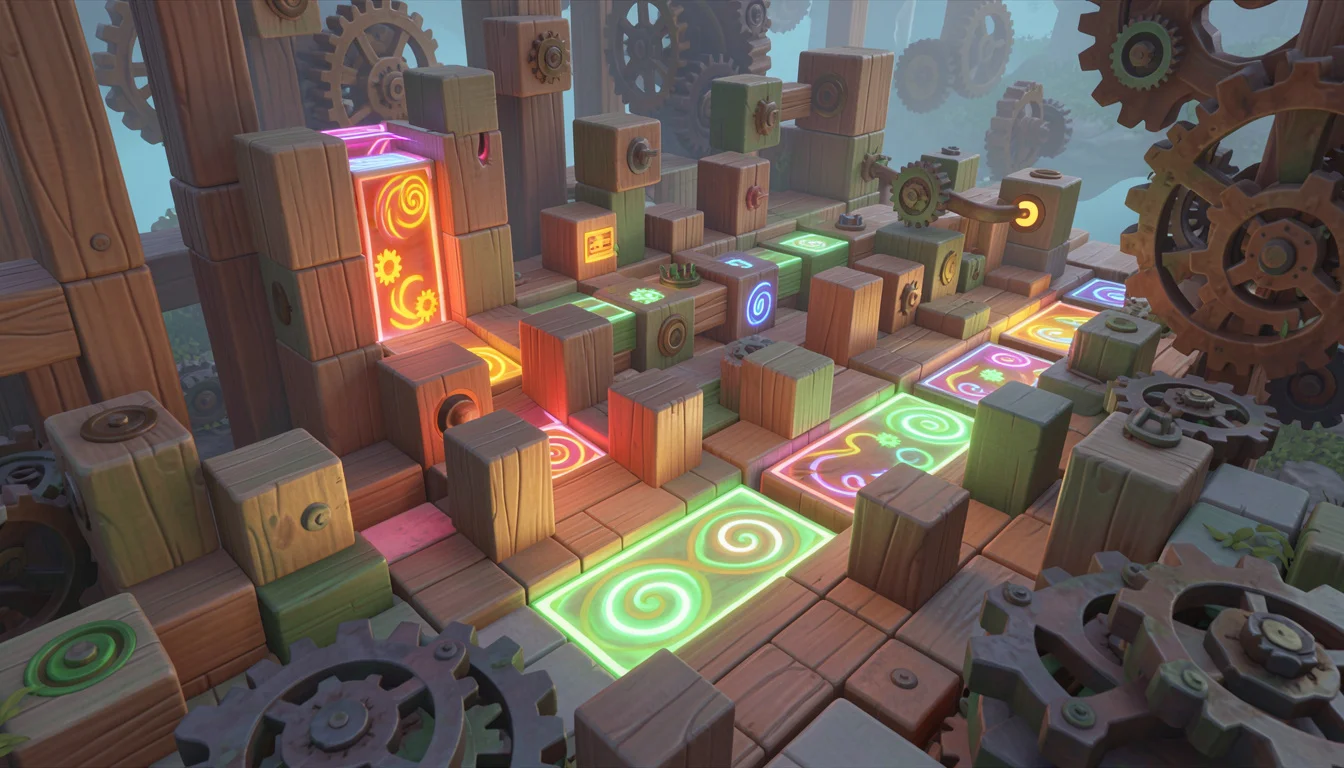
Introduction
You already know that feeling. A child sits down with a jumbled pile of pieces. Their eyebrows scrunch up. Their fingers start moving. Minutes later, something clicks, and their face lights up. That tiny moment is exactly what a puzzle playground is built on. It turns thinking into play, and play into growth.
A puzzle playground is more than just a room full of jigsaw pieces. It is a carefully designed space, physical or digital, where people of all ages solve problems, sharpen their minds, and have real fun doing it. These spaces are showing up in schools, homes, parks, and online platforms around the world.
In this article, you will find everything you need to know. We cover the benefits of puzzle playgrounds, how to set one up, the best types of puzzles by age group, what the research says, and how to keep the experience fresh and engaging for everyone. Whether you are a parent, teacher, or just a puzzle lover, this guide is for you.
What Is a Puzzle Playground, and Why Does It Matter?
A puzzle playground is any dedicated space or environment where the focus is solving puzzles in a fun, low-pressure, and stimulating way. It can be a corner of your living room, a full classroom setup, a public park installation, or an app on a tablet. The setup does not matter as much as the mindset behind it.
What makes a puzzle playground different from just “doing puzzles” is the environment. It is designed to encourage exploration. There is no timer, no pressure to be right the first time, and no single path to the answer. That open-ended feeling is what makes kids and adults come back again and again.
According to a 2022 report by the American Academy of Pediatrics, unstructured and semi-structured play significantly boosts cognitive development in children aged 3 to 12. Puzzle play falls right into that category. It gives structure without rigidity, which is the sweet spot for learning.
The global educational toy market was valued at over 62 billion USD in 2023. A large portion of that growth is driven by puzzle-based learning tools. Parents and educators are actively looking for smarter ways to engage young minds, and the puzzle playground concept delivers exactly that.
The Real Benefits of a Puzzle Playground
You might be wondering whether puzzle play is actually that powerful, or whether it is just marketed well. The research is clear. Puzzles offer measurable cognitive, emotional, and social benefits. Here is a closer look.
1. Boosts Problem-Solving Skills
Every time a child tries to fit a piece into the wrong spot and corrects themselves, they are practicing critical thinking. A puzzle playground creates hundreds of these micro-moments per session. Over time, kids develop the habit of testing, failing, and adjusting. That is the foundation of good problem-solving.
2. Strengthens Focus and Patience
In a world full of five-second videos and instant notifications, puzzles ask you to slow down. They demand sustained attention. Studies from the University of Michigan found that children who regularly engage in puzzle play show improved attention spans compared to their peers. A puzzle playground makes this practice feel rewarding rather than forced.
3. Builds Spatial Reasoning
Spatial reasoning is the ability to mentally manipulate objects and understand how shapes relate to each other. It is a core skill in math, science, engineering, and design. Puzzle playgrounds are one of the most natural ways to develop this skill early. Even simple jigsaw puzzles train the brain to rotate and visualize shapes in space.
4. Encourages Social Collaboration
Group puzzle sessions build communication and teamwork. When two kids work together on a puzzle, they negotiate, share strategies, and celebrate small wins together. Setting up a puzzle playground in a shared space naturally invites this kind of collaboration. Teachers often use it as a gentle way to build classroom community.
5. Reduces Stress and Promotes Calm
I have personally used puzzle sessions as a wind-down activity after a hectic day, and the effect is noticeable. Research supports this too. Working on puzzles activates the brain’s reward system through small, consistent wins. It brings you into a flow state that lowers cortisol and promotes relaxation. A well-designed puzzle playground can serve as a mindfulness space for adults as much as a play area for kids.
Types of Puzzles Perfect for a Puzzle Playground
Not all puzzles are created equal. Different types work better for different ages, goals, and settings. Here is a breakdown of what works best in a puzzle playground environment.
- Jigsaw Puzzles: Classic and timeless. Great for all ages. Start with large-piece versions for toddlers and graduate to 1000-piece sets for older kids and adults.
- 3D Puzzles: These add a physical dimension to the challenge. Building animals, landmarks, or vehicles in 3D is highly engaging and builds fine motor skills.
- Logic Puzzles and Brain Teasers: Perfect for school-age children and adults. These sharpen deductive reasoning and are often used in gifted education programs.
- Maze Puzzles: Whether on paper or a physical wooden board, mazes build planning skills and the ability to think several steps ahead.
- Word and Number Puzzles: Crosswords, Sudoku, and word searches blend literacy and numeracy with play. These are ideal for older kids and adults in a puzzle playground setting.
- Digital Puzzle Games: Apps like Monument Valley or Thinkrolls offer high-quality puzzle experiences on screens. These work well in a hybrid puzzle playground.
- Physical Obstacle Puzzles: Think escape rooms scaled for younger audiences. These bring the body into the puzzle experience and are incredibly engaging for active learners.
How to Set Up Your Own Puzzle Playground at Home or School
You do not need a massive budget or a dedicated room to create a great puzzle playground. You need the right setup, the right attitude, and a few key elements. Here is how to do it well.
Step 1: Choose Your Space
Pick a spot with good lighting and a flat, stable surface. A corner of a bedroom, a section of a classroom, or a garden patio all work. The key is that the space feels dedicated and inviting. Keep it tidy and organized so kids know exactly where the puzzle zone is.
Step 2: Stock It by Age Group
Match the difficulty level to the age group that will use the space most. Here is a simple guide:
- Ages 2 to 4: Simple shape sorters, chunky jigsaws with 4 to 12 pieces, and peg puzzles.
- Ages 5 to 7: Floor puzzles (24 to 48 pieces), simple maze boards, and matching games.
- Ages 8 to 12: 100 to 500 piece jigsaws, logic grid puzzles, and 3D construction puzzles.
- Ages 13 and up: Complex jigsaws, Sudoku, brain teaser sets, escape room kits, and digital puzzle games.
Step 3: Create a Low-Pressure Atmosphere
This is the most important step. A puzzle playground should never feel like a test. Display puzzles openly. Let children pick what interests them. Resist the urge to correct or rush them. When a child feels safe to struggle, they develop real resilience.
Step 4: Add Variety and Rotate Regularly
Novelty drives engagement. Swap out puzzles every few weeks to keep the space feeling fresh. Introduce seasonal themes, puzzle challenges, or collaborative goals like completing a giant floor puzzle as a class project. These small tweaks keep the puzzle playground exciting over the long term.
Puzzle Playgrounds Are Not Just for Kids
Adults often overlook puzzle play because it seems childish. That is a missed opportunity. A puzzle playground designed for adults can be a genuinely transformative space. More companies, coworking spaces, and wellness retreats are incorporating puzzle areas into their designs.
A 2021 study published in the Archives of Gerontology and Geriatrics found that adults who regularly engage in puzzle activities show a significantly lower rate of cognitive decline as they age. Memory, processing speed, and reasoning all benefit from consistent puzzle practice. The earlier you start, the better, but it is never too late.
For adults, a puzzle playground can also serve as a social space. Weekly puzzle nights, escape room date nights, and logic challenge clubs are all examples of puzzle playground concepts that bring adults together in a healthy, screen-light environment. We have seen a surge in these kinds of social puzzle events since 2020, as people sought meaningful offline connection.
Digital vs Physical: Which Puzzle Playground Is Better?
This question comes up a lot, especially for parents managing screen time. The honest answer is that both have real value, and the best puzzle playground combines them thoughtfully.
Physical puzzles offer tactile feedback. They develop fine motor skills. They encourage eye-hand coordination. And they completely remove distractions. There are no notifications, no autoplay videos, and no algorithm trying to keep a child glued to a screen. Physical puzzle play is focused by nature.
Digital puzzles, on the other hand, offer huge variety at low cost. They can adapt in real time to a child’s skill level. They provide instant feedback and often include sound and animation that make them exciting for younger players. Apps like Thinkrolls, Tozzle, and Montessori Crosswords are well-designed digital tools that complement a physical puzzle playground beautifully.
A smart rule of thumb: aim for at least 70% physical puzzle time for younger children (under 8), and allow more digital variety as kids get older. For adults, the balance depends entirely on personal preference. The goal is simply to keep puzzling, in any format.
The Rise of the Outdoor Puzzle Playground
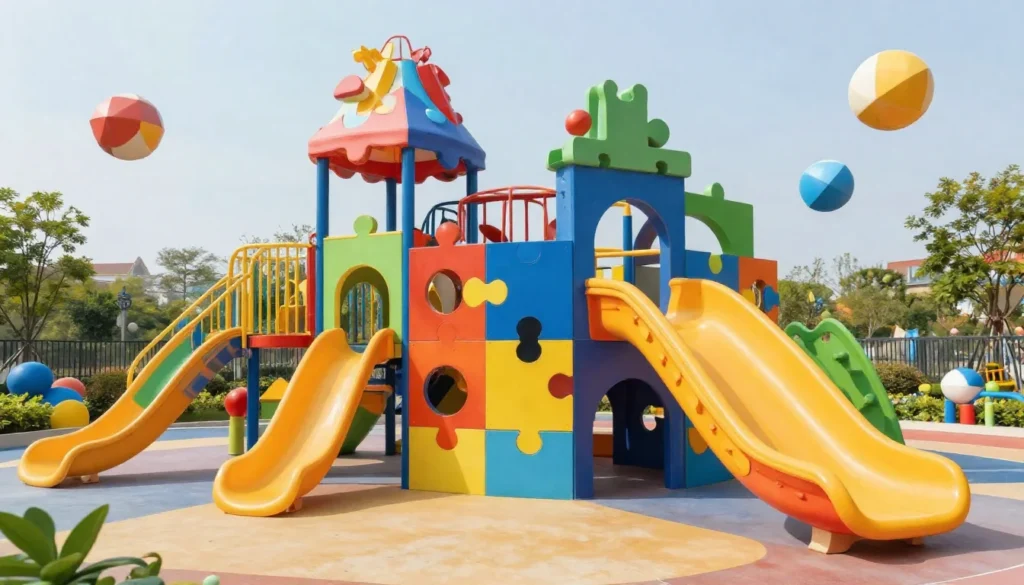
One of the most exciting trends in child development is the outdoor puzzle playground. Cities and schools around the world are installing puzzle-based play structures in parks and schoolyards. These spaces combine physical movement with cognitive challenge in a way that traditional slides and swings simply cannot.
Outdoor puzzle playgrounds often include giant block stacking games, large-scale mazes, pattern-matching panels, and sensory exploration stations. Children move their bodies while using their minds, which research shows produces better learning outcomes than either physical or cognitive activity alone.
Countries like Finland, Japan, and the Netherlands have pioneered outdoor puzzle playground design. Finnish schools in particular have incorporated these spaces as part of their legendary education model, which consistently ranks among the best in the world. The results speak for themselves: students who use these spaces regularly score higher on creative problem-solving tests.
Tips to Keep Your Puzzle Playground Engaging Long-Term
Even the best-designed puzzle playground can get stale without some intentional upkeep. Here are practical ideas to keep the energy alive.
- Introduce a Puzzle of the Week: Feature one new puzzle each week. Build excitement by hinting at it the day before. This creates a ritual that children look forward to.
- Host a Puzzle Challenge: Set friendly competitions. Who can finish the most puzzles this month? Who can solve the mystery puzzle in the shortest time? Keep it light and inclusive.
- Add a Progress Wall: Let kids display completed puzzles or mark milestones on a chart. Visual progress is incredibly motivating for children aged 5 and up.
- Mix Solo and Group Play: Some children thrive alone; others love collaboration. Design your puzzle playground to support both modes. This keeps it accessible and enjoyable for different personality types.
- Tie Puzzles to Learning Themes: If a class is studying space, add space-themed puzzles. If a child loves dinosaurs, stock dinosaur jigsaws. Connecting puzzles to personal interests multiplies engagement instantly.
Conclusion: Your Puzzle Playground Journey Starts Now
A puzzle playground is one of the smartest investments you can make in a child’s development, or in your own mental fitness. It is affordable, flexible, and backed by real science. Whether you set up a simple corner at home or help design a full outdoor puzzle playground for a school, the benefits are immediate and long-lasting.
The key takeaways are simple. Puzzles build problem-solving skills, patience, spatial reasoning, and social connection. A well-designed puzzle playground removes pressure and adds joy to learning. You can start small and grow over time. And the best puzzle playground is the one that gets used, not the most expensive one.
So, what kind of puzzle playground will you create? Start with one puzzle, one corner, and one curious mind. You might be surprised where it leads. Share your puzzle playground ideas in the comments below, or send this article to a teacher or parent who needs a little inspiration today.
FAQs About Puzzle Playground
1. What age is best to introduce a puzzle playground?
You can introduce puzzle play as early as 18 months with simple shape sorters and peg puzzles. The earlier children are exposed to puzzle environments, the stronger their foundational problem-solving skills tend to be. However, a puzzle playground is beneficial at any age.
2. How many puzzles do I need to start a puzzle playground?
You do not need many. Start with 3 to 5 puzzles of varying types and difficulty. Quality and variety matter more than quantity. As the space gets used, you can add more based on which types are most popular.
3. Can a puzzle playground work for children with learning differences?
Yes, absolutely. Puzzle playgrounds are often recommended by occupational therapists for children with ADHD, autism, and dyslexia. They provide structured play without social pressure and allow children to work at their own pace. Tactile and visual puzzles are especially effective for sensory learners.
4. What is the difference between a puzzle playground and an escape room?
An escape room is a time-pressured, narrative-driven puzzle experience designed for teams. A puzzle playground is open-ended, pressure-free, and designed for ongoing independent or collaborative exploration. Escape rooms are one specific type of puzzle experience that can exist within a puzzle playground concept.
5. How do I choose the right puzzle difficulty for my child?
Look for puzzles that challenge your child without frustrating them. A good rule is to choose a puzzle that takes 20 to 40 minutes to complete. If a child finishes in 5 minutes, it is too easy. If they give up in frustration after 10 minutes, it is too hard. Adjust based on their reaction.
6. Are digital puzzle games as effective as physical puzzles?
Both are effective, but in different ways. Physical puzzles are better for fine motor development, tactile learning, and screen-free focus. Digital puzzles offer adaptability, variety, and instant feedback. A balanced puzzle playground uses both strategically rather than relying on just one format.
7. Can a puzzle playground improve academic performance?
Yes. Multiple studies link regular puzzle play with improved math scores, better reading comprehension, and stronger executive function skills. These benefits are strongest when puzzle play starts early and continues consistently through the school years. Teachers who incorporate puzzle playgrounds in classrooms often report better focus and classroom engagement overall.
8. What budget do I need to set up a puzzle playground?
You can start a solid puzzle playground for under 50 USD. Basic jigsaw puzzles, a flat surface, and some organization are all you truly need. As your collection grows, budget for one or two new puzzles per month. Thrift stores, school supply sales, and puzzle swap events are great ways to expand on a tight budget.
9. How do I keep children motivated in a puzzle playground?
Rotate puzzles regularly, celebrate completions, and let children choose what they work on. Avoid rewarding children with external prizes for every puzzle. Instead, build intrinsic motivation by connecting puzzle completion to pride and discovery. Peer collaboration also naturally boosts motivation.
10. Do outdoor puzzle playgrounds require a lot of maintenance?
Outdoor puzzle playgrounds designed for public use are built with weather-resistant materials and require minimal upkeep. For school or backyard setups, choose UV-resistant plastic or sealed wood pieces. Regular inspection for broken parts and a quick clean every few weeks keeps the space safe and inviting.
Also Read In bestswitchgames.com
Email: johanharwen314@gmail.com
Author Name: Hamid Ali
About the Author: Hamid Ali is a content writer and educational specialist with a passion for learning, child development, and smart play. With over seven years of experience writing for parenting blogs, EdTech platforms, and educational publishers, Hamid brings a blend of research-backed insight and everyday practicality to every article. He believes that the best learning happens when it does not feel like learning at all. When he is not writing, Hamid enjoys building puzzles with his two kids and exploring new ways to make education more joyful. You can follow his work and connect with him on LinkedIn and through his personal blog.