
Introduction
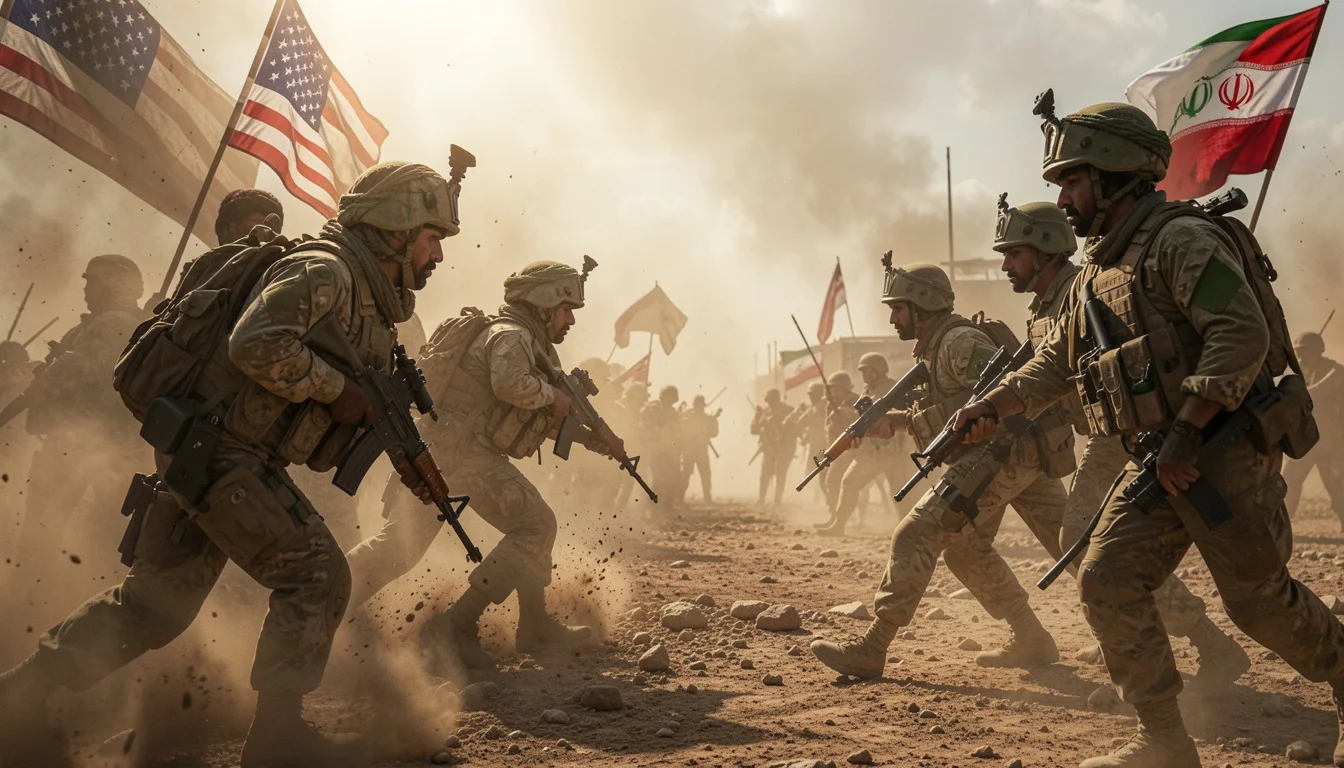
The world woke up to a new reality on February 28, 2026. The Iran vs USA war, a conflict that many feared for decades, became real in a matter of hours. Joint United States and Israeli airstrikes hit Iran, killing its Supreme Leader and triggering a cascade of events that changed the Middle East and sent shockwaves through the global economy.
If you have been trying to understand what actually happened, why it happened, and what it means for the world going forward, this article gives you the full picture. You do not need to dig through dozens of reports and conflicting headlines. Everything is laid out here clearly and in plain language.
This piece covers the background that built toward this conflict, the key military events, the global reactions, the humanitarian impact, what experts are saying, and where things stand right now. The Iran vs USA war is one of the defining events of our time, and understanding it matters whether you follow geopolitics closely or are just trying to make sense of the news.
Background: Decades of Tension That Finally Exploded
The Iran vs USA war did not appear out of nowhere. The roots of this conflict stretch back over four decades. Understanding the background helps you make sense of why February 28, 2026 happened at all.
The Nuclear Deal That Never Held
The central issue between the United States and Iran for years has been Iran’s nuclear program. In 2015, the Joint Comprehensive Plan of Action, commonly known as the JCPOA, was signed. It was an agreement that placed strict limits on Iran’s nuclear activities in exchange for relief from international sanctions.
In 2018, during his first term in office, President Donald Trump withdrew the United States from the JCPOA entirely. He called it a bad deal and reimposed sweeping sanctions on Iran under what he called a maximum pressure campaign. That decision permanently damaged the diplomatic foundation between the two countries.
When Trump returned to office in 2025, his administration initially attempted new negotiations. These were the first direct US-Iran talks since 2018. But those talks ultimately collapsed.
The Twelve-Day War of June 2025
Before the 2026 conflict, there was already a major escalation in 2025. In June of that year, Israel launched a unilateral military strike against Iran after the International Atomic Energy Agency declared that Iran was violating its non-proliferation obligations for the first time in twenty years.
Iran responded by announcing it would open a secret uranium enrichment site. The conflict that followed lasted twelve days. During that period, the United States conducted airstrikes on Iranian nuclear sites. A ceasefire was eventually brokered through Oman on June 24, 2025.
In the aftermath of that twelve-day conflict, Iran’s currency entered a severe free fall. New international sanctions were imposed in September 2025. The economic crisis triggered massive protests inside Iran beginning in late December 2025.
The 2026 Iranian Protests and the Crackdown
The largest wave of protests inside Iran since the 1979 revolution broke out across the country in January 2026. The United States encouraged these protests. When Iranian security forces responded with deadly force, killing at least 30,000 people according to Iranian health officials, it set the moral and political stage for what came next.
President Trump had previously threatened US intervention if Iranian security forces killed protesters. That threat was not forgotten.
Key Details: What Exactly Happened on February 28, 2026?
On the morning of February 28, 2026, the United States and Israel launched coordinated military strikes against Iran. These were not limited, targeted strikes. They were large-scale operations with a sweeping objective.
The stated goals were to induce regime change in Iran and to permanently destroy its nuclear and ballistic missile program. This represented a fundamental shift from previous US military actions against Iran, which had been more contained.
Supreme Leader Ayatollah Ali Khamenei was killed in the strikes, along with several family members and senior officials. This was an unprecedented act. Khamenei had led Iran since 1989 and was the central figure of the Islamic Republic for nearly four decades.
The strikes targeted military assets, institutional buildings, nuclear facilities, government infrastructure, and leadership locations throughout the country. Iranian civilians found themselves in the middle of a warzone almost without warning. Tehran, the capital city of over nine million people, was described as a ghost town as residents feared going outside.
The Role of Cyber Operations
Before the main strikes began, coordinated cyber and space operations played a major role. US officials confirmed that these operations disrupted Iranian communications and sensor networks with the explicit goal of leaving the adversary, in their words, disrupted, disoriented and confused.
In one striking example of information warfare, Israeli operators compromised a popular Iranian prayer application called BadeSaba Calendar, which had more than five million downloads. They used it to push notifications in Persian urging military personnel and civilians to defect, lay down arms, or join opposition forces.
Iran’s Counterstrike: How Tehran Hit Back
Iran did not absorb the strikes without response. Within hours, Iran launched retaliatory missile and drone attacks that spread across the region far more widely than in the 2025 conflict.
In 2025, Iran’s retaliation was largely limited to Israel and specific US military assets. In 2026, Tehran widened the map dramatically. Iranian strikes hit US military presence and civilian infrastructure in nine countries, including Bahrain, Kuwait, Qatar, Saudi Arabia, Oman, and the United Arab Emirates.
Iran also targeted oil infrastructure across the region, including vessels operating near the Strait of Hormuz.
Iranian leadership appointed Khamenei’s son, Mojtaba Khamenei, as his replacement. An Interim Leadership Council was established on March 1 to exercise the functions of head of state during the transition period. Mojtaba Khamenei was formally elected supreme leader on March 8, 2026.
The Strait of Hormuz: A Global Crisis Triggered
Perhaps the single most consequential action Iran took in response to the strikes was closing the Strait of Hormuz to international traffic.
The Strait of Hormuz is the narrow waterway through which approximately 20 percent of the world’s oil supply passes. Tankers carrying crude oil, liquefied natural gas, and other essential goods pass through this chokepoint every single day. When Iran moved to restrict and block that traffic, the effects rippled outward almost immediately.
Brent crude oil prices surged past $100 per barrel with wild swings continuing as the standoff persisted. Fuel shortages appeared in parts of Asia. Industries dependent on natural gas, including fertilizer production and aviation, experienced significant disruption. Financial markets around the world felt the volatility.
Economists and analysts described the oil supply disruption as the largest in the history of the global oil market. That is a historic statement given the previous disruptions caused by the 1973 oil embargo and the Gulf War of 1990 and 1991.
Reactions from Around the World
The global reaction to the Iran vs USA war was sharp and divided along predictable lines, though some responses surprised observers.
Condemnation and Concern
Critics of the war, including many international legal experts and foreign governments, described the US strikes as illegal under both US law and international law. Many argued that actions of this scale require formal congressional authorization, a step the Trump administration bypassed.
Iran filed a lawsuit against the United States at the Hague Tribunal, invoking the Algiers Accords of 1981. Under those accords, the United States formally pledged that it would not intervene, directly or indirectly, politically or militarily, in Iran’s internal affairs.
United Nations Human Rights Chief Volker Türk described the conflict as reckless and stated that it was disproportionately impacting civilians across the Middle East.
Iran’s ambassador to the United Nations demanded compensation from Bahrain, Jordan, Qatar, Saudi Arabia, and the UAE, accusing them of violating their obligations toward Iran by cooperating with US forces.
The Gulf States’ Difficult Position
The Gulf Cooperation Council states found themselves in an extraordinarily difficult position. Several hosted US military facilities that were used in the operations. Iran struck those states in retaliation. The conflict forced governments that had been carefully maintaining relationships with both the United States and Iran to pick a side under fire.
Pakistan’s Surprising Role
One of the more significant geopolitical developments to emerge from the conflict was the role played by Pakistan. Pakistan stepped in as the primary mediator between the United States and Iran, eventually facilitating the ceasefire talks that led to the April 8 agreement. This elevated Pakistan’s regional profile in a way few analysts had predicted before the conflict began.
Impact on Civilians, Economies, and the Region
The human cost of the Iran vs USA war has been profound and continues to grow.
Civilian Suffering Inside Iran
Iranian civilians experienced the conflict most acutely. Mass displacement occurred across multiple cities. Internet blackouts cut millions of people off from information and communication. Schools were ordered closed. Public services ran at reduced capacity.
Reports indicated that humanitarian conditions inside Iran deteriorated significantly during and after the strikes. Prisoners at Evin Prison, already one of the most notorious detention facilities in the country, reportedly received only limited food and water during the conflict. Human rights organizations documented concerns about the use of minors in military-related activities.
Hundreds of thousands of foreign nationals inside Iran at the time of the strikes found themselves stranded. Air travel across the region was severely disrupted as multiple countries closed their airspace. Many people improvised overland routes to reach open airports in Saudi Arabia or Oman.
Cultural and Historical Damage
Reports confirmed damage to numerous historic and cultural sites across Iran during the course of US and Israeli strikes. This dimension of the conflict drew condemnation from archaeologists, historians, and cultural preservation groups worldwide.
Global Economic Consequences
The economic impact of the Iran vs USA war extended well beyond the Middle East. The closure of the Strait of Hormuz created the largest oil supply disruption in recorded history. Fuel shortages appeared across Asia. Aviation costs surged. Fertilizer prices spiked. Tourism across the entire region collapsed almost entirely.
Financial markets experienced significant volatility throughout the active phase of the conflict. Businesses operating in or near the Gulf region faced enormous uncertainty about supply chains, energy costs, and the safety of operations.
Expert Analysis: Was This War Legal and Was It Necessary?
The question of legality has dominated expert discussion of the Iran vs USA war since the first strikes landed.
Many legal and military experts argued that actions of this magnitude require formal congressional authorization under the War Powers Resolution. They pointed to the frequent use of the word war in official Trump administration communications as evidence that the administration itself understood the scope of what it was doing.
The Trump administration rejected these arguments, citing the precedent set by prior presidential administrations conducting military actions without formal congressional declarations of war.
On the military side, analysts generally concluded that Iran proved more resilient than the US and Israel had anticipated. Despite significant damage to its nuclear infrastructure, military assets, and leadership structure, Iran’s capacity to retaliate regionally and to disrupt global trade through the Strait of Hormuz exceeded what planners had expected or planned for.
Some analysts drew parallels between the current situation and the standoff between the United States and Iraq after the 1991 Gulf War. That comparison carries serious implications. That standoff lasted more than a decade, produced recurring crises, and eventually led to a second, far larger conflict in 2003.
The Ceasefire: What Pakistan Brokered and What Fell Apart
After more than five weeks of active fighting, the United States and Iran agreed to a two-week ceasefire on April 8, 2026, mediated by Pakistan. The ceasefire was fragile from the start.
Just hours after the United States announced the ceasefire, Israeli forces conducted a major military operation across Lebanon that killed hundreds of people and wounded more than one thousand others. There was immediate disagreement between the parties about whether Lebanon was included in the ceasefire terms.
President Trump extended the ceasefire on April 21, citing internal divisions within Iran. He stated that the extension would remain in place until Iran submitted a formal proposal for talks.
As of late April 2026, peace talks remained stalled. The overlap between American and Iranian demands was described as minimal. The Strait of Hormuz remained largely closed. Iran had seized two ships near the strait, and the United States continued enforcing a naval blockade of Iranian ports, redirecting more than thirty vessels.
A memorandum of understanding was announced on June 14 by mediators, intended to be signed on June 19 and to bring the conflict to a formal end within 60 days. Whether that timeline holds remains to be seen.
What’s Next for Iran, the USA, and the Middle East?
The Iran vs USA war has entered a deeply uncertain phase. The active military conflict has paused, but the underlying issues remain completely unresolved.
The key issues under discussion in ongoing talks include freedom of navigation through the Strait of Hormuz, Iran’s nuclear and ballistic missile program, reconstruction assistance and sanctions relief, and the framework for a long-term peace agreement.
Several possible paths forward exist according to analysts.
A negotiated settlement remains possible if both sides can find enough common ground to build a framework. This would likely require Iran to accept significant constraints on its nuclear program and the United States to offer meaningful sanctions relief and security guarantees.
An uneasy and temporary ceasefire could drift into a long-term standoff similar to what occurred with Iraq after 1991. This scenario would involve intermittent low-level conflict, continued economic pressure on Iran, and ongoing instability across the Gulf states.
A renewed escalation remains possible if negotiations collapse entirely. With the Strait of Hormuz still disrupted and both sides maintaining significant military postures in the region, the conditions for escalation have not been removed.
The long-term regional balance of power has already shifted. Gulf states are reassessing their security arrangements. The role of Pakistan as a mediating power has grown. China, Russia, and other major powers are watching the outcome closely to understand what it signals about American willingness to use military force and to bypass international law.
Conclusion
The Iran vs USA war represents one of the most significant geopolitical events of this decade. It emerged from decades of accumulated tension, failed diplomacy, nuclear brinkmanship, and a series of military escalations that each raised the stakes higher than the last.
The strikes of February 28, 2026 killed Iran’s supreme leader, damaged its military infrastructure, and sent shockwaves through the global economy. Iran’s response closed the world’s most important oil chokepoint and spread the conflict across nine countries. A fragile ceasefire brokered by Pakistan has paused the active fighting, but the path to genuine resolution remains long and uncertain.
What this conflict has made clear is that the consequences of military escalation in one of the world’s most sensitive regions are never contained. They spread. They affect oil prices in Tokyo, fuel costs in Lagos, and food prices in London. The Iran vs USA war is not just a regional story. It is a global one.
What do you think should happen next? Should the United States pursue a comprehensive negotiated settlement, or is the current pressure strategy the right approach? Share this article with someone who wants to understand what is really happening in the Middle East right now.
FAQs
1. What started the Iran vs USA war in 2026?
The war began on February 28, 2026, when the United States and Israel launched coordinated airstrikes against Iran. The strikes followed the collapse of diplomatic talks, a brutal Iranian crackdown on domestic protests in January 2026, and years of escalating tension over Iran’s nuclear program.
2. Was Iran’s Supreme Leader really killed?
Yes. Ayatollah Ali Khamenei, who had led Iran since 1989, was killed in the US and Israeli strikes on February 28, 2026, along with several family members. His son Mojtaba Khamenei was elected as his replacement on March 8, 2026.
3. Why did Iran close the Strait of Hormuz?
Iran closed the Strait of Hormuz as a retaliatory measure against the United States and its allies. The strait is a critical global oil chokepoint through which approximately 20 percent of the world’s oil supply passes. Closing it gave Iran significant leverage over global energy markets.
4. How did the Iran vs USA war affect oil prices?
Oil prices surged past $100 per barrel following the closure of the Strait of Hormuz. The disruption was described by economists as the largest oil supply disruption in the history of the global market, causing fuel shortages in parts of Asia and widespread economic volatility.
5. Is there a ceasefire between Iran and the USA?
Yes. A ceasefire was agreed on April 8, 2026, mediated by Pakistan. It was extended by President Trump on April 21. As of mid-June 2026, the Strait of Hormuz remains largely closed and peace talks have stalled, though a memorandum of understanding was announced by mediators on June 14 aimed at formal resolution within 60 days.
6. Was the war legal under US law?
Many legal and military experts argued that the strikes were illegal under US law because they required formal congressional authorization under the War Powers Resolution. The Trump administration rejected those arguments, citing precedents set by previous administrations.
7. How did Iran respond to the US and Israeli strikes?
Iran launched retaliatory missile and drone strikes against US military bases and infrastructure across nine countries in the region. It also closed the Strait of Hormuz, targeted oil infrastructure, and seized ships near the strait.
8. Which countries mediated the ceasefire?
Pakistan played the primary mediating role in brokering the April 8, 2026 ceasefire between the United States and Iran. Oman had previously mediated the earlier ceasefire that ended the Twelve-Day War in June 2025.
9. What happened to Iranian civilians during the war?
Iranian civilians experienced mass displacement, internet blackouts, school closures, damaged infrastructure, and severely deteriorating humanitarian conditions. Tehran was described as a ghost town at the height of the strikes. Hundreds of thousands of foreign nationals inside Iran were stranded as regional air travel collapsed.
10. What is the result of Iran and US war?
Talks remain stalled as of June 2026. The key issues under discussion include the Strait of Hormuz, Iran’s nuclear and ballistic missile program, sanctions relief, and a long-term peace framework. A memorandum of understanding was announced on June 14, 2026 with a target of formal resolution within 60 days, though significant uncertainty remains.
Also Read In bestswitchgames.com
Email: johanharwen314@gmail.com
Author Name: Hamid Ali
About the Author: Hamid Ali is an independent writer and geopolitical analyst with a deep interest in international conflict, diplomacy, and the human stories behind major world events. He writes clearly and directly, believing that complex global events should be understandable to every reader, not just experts. Hamid covers breaking international developments with a focus on accuracy, context, and real-world impact. When he is not writing, he is reading everything he can get his hands on about history and world affairs.