

Jigsaw do you want to play a game? If you are searching this phrase, you may be looking for information about jigsaw puzzles, their benefits, or the idea of turning puzzle solving into an enjoyable hobby.
Jigsaw puzzles are simple in concept: you arrange individual pieces until they form a complete picture. Yet the activity combines visual perception, attention, memory, planning, patience, and problem solving. It can also become a relaxing social activity that brings families and friends together.
Research has found that jigsaw puzzling engages multiple cognitive abilities, although it is important not to overstate the evidence. Studies suggest that puzzle solving is mentally stimulating, but it should not be treated as a guaranteed way to prevent cognitive decline or improve overall brain health.
What Is a Jigsaw Puzzle?
A jigsaw puzzle is a picture divided into interlocking pieces that must be assembled to recreate the complete image.
Puzzles come in many forms, including:
- Picture puzzles
- Educational puzzles
- Landscape puzzles
- Animal puzzles
- Art puzzles
- Geography puzzles
- Children’s puzzles
- 500-piece puzzles
- 1,000-piece puzzles
- Larger challenging puzzles
The basic process is straightforward: identify useful visual information, match pieces, connect them, and gradually build the finished picture.
That simple process can require considerable concentration when the puzzle becomes difficult.
Why Are Jigsaw Puzzles Good for You?
Jigsaw puzzles are useful because they provide mental stimulation while also offering a relaxing, screen-free leisure activity.
Solving a puzzle requires several types of visual and cognitive processing. Research published in Frontiers in Aging Neuroscience found that jigsaw puzzling engages abilities including visual perception, mental rotation, cognitive flexibility, visual scanning, reasoning, working memory, and episodic memory.
However, there is an important distinction between engaging cognitive skills and proving that puzzles prevent dementia or permanently improve intelligence. Current evidence does not justify making those stronger claims.
The most realistic benefit is that a puzzle gives your brain something active and structured to work on.
What Are the Main Benefits of Jigsaw Puzzles?
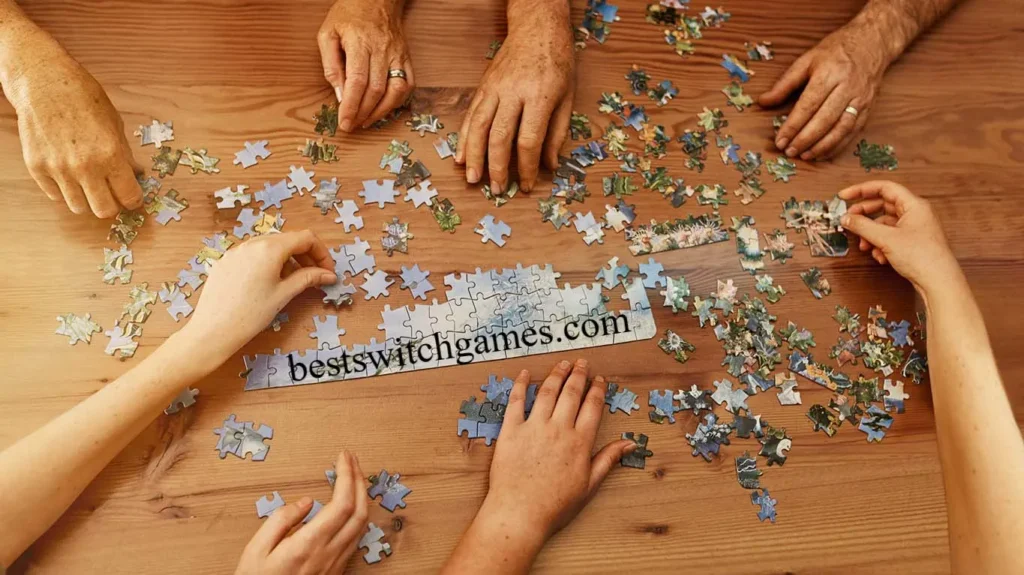
Jigsaw puzzles can provide several practical benefits, particularly when they are used as part of a balanced lifestyle.
1. They Encourage Concentration
Completing a difficult puzzle requires sustained attention.
Instead of constantly switching between notifications, apps, websites, and other distractions, you can focus on one physical task.
You may spend several minutes examining the same section of an image, looking for a piece with the correct shape, color, pattern, or visual detail.
That makes puzzling a useful screen-free activity for people who enjoy focused hobbies.
2. They Practice Problem-Solving Skills
Every unfinished puzzle presents a problem:
Which piece belongs here?
You may solve it by comparing:
- Colors
- Shapes
- Patterns
- Edges
- Textures
- Image details
- Piece orientation
As the puzzle gets harder, you may develop a strategy rather than simply trying random pieces.
That process involves logical thinking, visual comparison, decision making, and problem solving.
3. They Engage Visual and Spatial Skills
Jigsaw puzzles are particularly interesting because you have to understand how individual pieces relate to a larger image.
Research on jigsaw puzzling has identified visual perception, constructional skills, mental rotation, and spatial processing among the abilities involved in the activity.
For example, you may recognize that a piece belongs near a mountain, rotate it mentally, and then determine whether its shape fits the surrounding pieces. wentworthpuzzles.com
4. They Can Provide a Sense of Accomplishment
Finishing a puzzle produces a visible result.
You start with hundreds of separate pieces and end with one complete picture.
That progress can be satisfying because the final image provides a clear sense of achievement.
The experience can also teach patience and perseverance. A challenging section may seem impossible at first, but gradually becomes easier as more pieces are connected.
5. Puzzles Can Be Relaxing
Jigsaw puzzling can become a relaxing hobby because it encourages you to concentrate on a single offline activity.
Some people enjoy solving puzzles while listening to music or having a conversation with family members.
It is not accurate to say that every puzzle automatically reduces stress. A puzzle that is too difficult can create frustration instead.
The key is choosing a difficulty that is challenging without becoming overwhelming.
Do Jigsaw Puzzles Improve Memory?
Jigsaw puzzles use memory, but evidence for broad, lasting memory improvement from jigsaw puzzling alone is limited.
While solving a puzzle, you may remember where you saw a particular color, which pieces belong to a certain area, or what shapes you have already tested.
A 2018 study involving 100 healthy adults aged 50 and older found strong associations between jigsaw-puzzle skill and several measured cognitive abilities. However, participants assigned to a 30-day jigsaw intervention improved their puzzle skill but did not show a significant improvement in global visuospatial cognition compared with the control group.
That is an important finding because it shows why claims about puzzle benefits should remain evidence-based.
Puzzles clearly provide mental exercise, but they should not be marketed as a guaranteed treatment for memory problems.
Can Jigsaw Puzzles Support Brain Health?
They can be a worthwhile mentally stimulating activity, but they are only one part of a healthy lifestyle.
Researchers have investigated puzzles as a form of cognitive enrichment because they are inexpensive, accessible, and can be completed alone or with other people.
The PACE research project specifically examined whether regular jigsaw puzzling could affect visuospatial cognition and psychological outcomes in adults aged 50 and older.
Research on puzzle activities is promising, but studies differ in design and many are observational. Therefore, it is better to describe jigsaw puzzles as a potentially useful cognitive leisure activity rather than a medical intervention.
Are Jigsaw Puzzles Good for Kids?
Yes, age-appropriate puzzles can be an enjoyable way for children to practice visual matching, patience, coordination, and problem solving.
Children can start with puzzles containing relatively few large pieces and gradually move toward more complex designs.
Educational puzzles can introduce topics such as:
- Animals
- Geography
- Numbers
- Letters
- Space
- Science
- Maps
- Famous landmarks
For younger children, the activity can also involve parents or teachers. Solving puzzles together creates opportunities for communication and encouragement.
The goal should be enjoyment and development rather than making children feel pressured to complete increasingly difficult puzzles.
What About Jigsaw Puzzles for Adults?
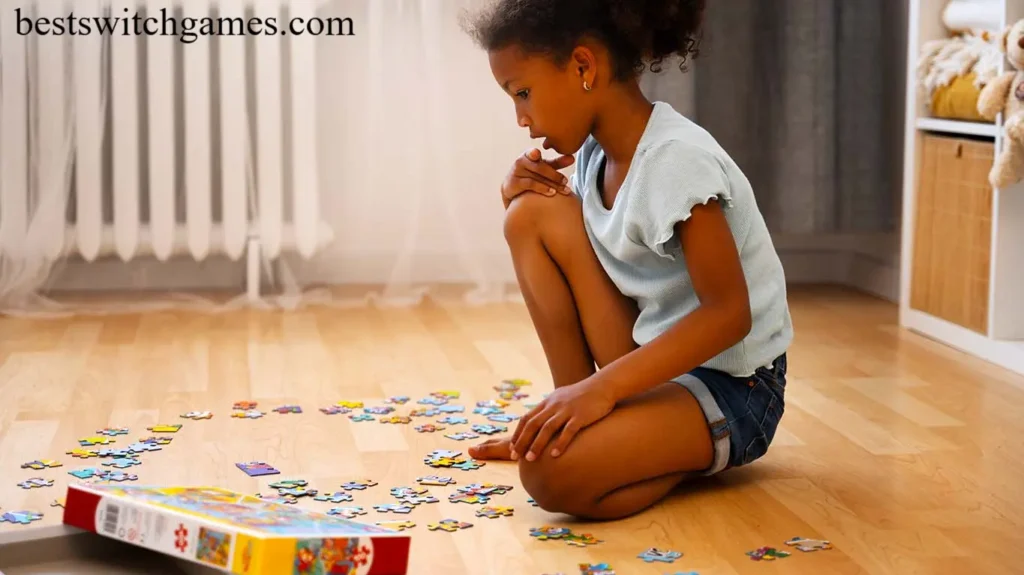
Adults can choose puzzles according to their interests and available time.
A 500-piece puzzle may be manageable for a casual puzzle hobby, while a 1,000-piece puzzle provides a much longer challenge.
Popular themes include:
- Travel
- Nature
- Architecture
- Art
- Movies
- Animals
- Historical scenes
- Maps
- Fantasy
- Photography
For adults, puzzling can also provide a convenient digital detox from phones, computers, and television.
Are Jigsaw Puzzles Useful for Seniors?
Jigsaw puzzles can be an enjoyable cognitive leisure activity for older adults, particularly when the difficulty is appropriate.
The research is especially interesting in this age group. A study of 100 healthy adults aged 50 and above found that lifetime jigsaw-puzzle experience was associated with better global visuospatial cognition, although the researchers noted that long-term observational associations cannot by themselves prove that puzzling caused the cognitive differences.
For seniors, practical considerations matter too.
A puzzle with:
- Larger pieces
- Strong color contrast
- A clear image
- Fewer pieces
- A comfortable table setup
may be easier and more enjoyable than an extremely complex puzzle.
The activity can also become a social experience when family members or friends solve it together.
Can Puzzles Help With Social Well-Being?
Yes, especially when they are treated as a shared activity rather than a solitary challenge.
Solving puzzles together encourages people to communicate:
“I think this piece belongs over here.”
“Look for the blue section.”
“Try turning that piece around.”
This creates natural opportunities for conversation, teamwork, collaboration, and family bonding.
A puzzle can therefore function as both entertainment and a social activity.
It can be particularly useful for people who want an alternative to screen-based entertainment during family gatherings.
How Do You Choose the Right Puzzle Difficulty?
The best puzzle is challenging enough to remain interesting but not so difficult that it becomes frustrating.
| Experience | Good starting point |
|---|---|
| Young child | Large-piece, simple picture puzzle |
| Beginner adult | Around 300–500 pieces |
| Regular puzzler | Around 500–1,000 pieces |
| Experienced puzzler | 1,000+ pieces |
| Group activity | Choose based on the group’s experience |
These are general guidelines rather than strict rules.
The image can matter as much as the piece count. A 500-piece puzzle with a large blue sky may be harder than a 1,000-piece puzzle containing many distinctive objects.
How to Complete a Jigsaw Puzzle More Easily
If you are new to puzzle solving, use a simple system.
Step 1: Choose a comfortable workspace
Use a flat surface large enough for the puzzle and some sorting.
Step 2: Turn all pieces face up
This makes the visual information easier to scan.
Step 3: Separate the edge pieces
The straight edges make it easier to establish the outside border.
Step 4: Sort by color and pattern
Create small groups for obvious sections of the image.
Step 5: Build recognizable areas
Work on objects, faces, buildings, text, or other distinctive features before tackling repetitive sections.
Step 6: Connect completed sections
Once smaller areas are assembled, connect them to create the larger picture.
Step 7: Take breaks
If you become frustrated, walk away for a few minutes and return later.
Sometimes a piece that seemed impossible becomes obvious when you look at the puzzle with fresh attention.
Jigsaw Puzzles vs. Digital Puzzle Games
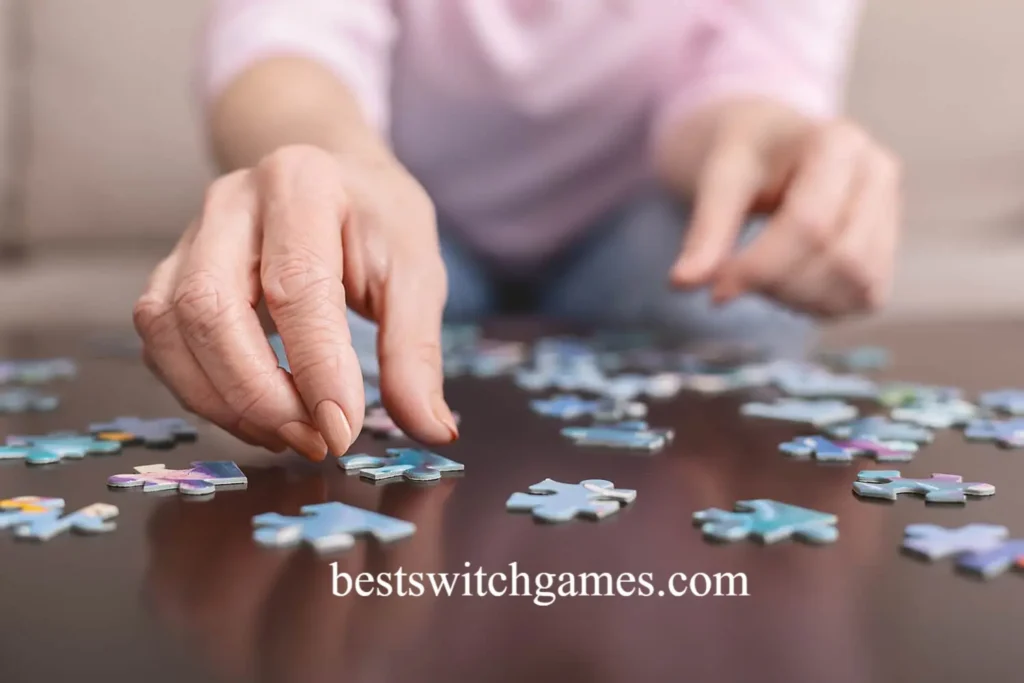
Both physical and digital puzzles can provide challenge and entertainment, but they offer different experiences.
| Physical jigsaw puzzles | Digital puzzle games |
|---|---|
| Screen-free | Usually screen-based |
| Physical pieces | Digital controls |
| Can decorate a room when completed | Easy to store digitally |
| Naturally encourages tabletop interaction | Often portable |
| No device required | Can be played almost anywhere |
| Good for family group activities | Often offers quick sessions |
Neither option is automatically better.
If your goal is to reduce screen time, a physical jigsaw puzzle has an obvious advantage.
If convenience matters most, a digital puzzle game may be easier.
Why Is Completing a Puzzle So Satisfying?
The satisfaction comes partly from visible progress.
At the beginning, the table may contain hundreds of disconnected pieces. As you solve sections, the image becomes clearer.
That creates a simple feedback loop:
Search → match → connect → progress → complete.
The process can encourage patience because progress is gradual rather than instant.
For some people, that is exactly what makes puzzling enjoyable.
Are Jigsaw Puzzles a Good Hobby?
Yes. Jigsaw puzzles can be a low-cost, flexible, creative hobby for children, adults, and seniors.
They require relatively little equipment beyond the puzzle and a suitable surface.
You can solve them alone, with a partner, with friends, or as a family activity.
They can also fit different personalities. Someone who enjoys quiet concentration may prefer solving alone, while someone who enjoys conversation may prefer solving puzzles together.
What Are the Limitations of Puzzle Benefits?
It is important to keep the evidence in perspective.
Jigsaw puzzles are not a replacement for:
- Medical treatment
- Physical exercise
- Adequate sleep
- Social relationships
- A balanced diet
- Professional help for mental-health concerns
Nor does completing puzzles guarantee protection against dementia or cognitive decline.
The strongest evidence supports the idea that puzzles are engaging cognitive leisure activities that exercise several mental processes. Research continues to examine whether regular puzzle participation produces broader long-term health benefits.
That balanced interpretation is more useful than claiming that puzzles are a cure-all.
The Bottom Line
Jigsaw puzzles are more than a way to pass time.
They combine visual perception, concentration, problem solving, patience, matching, pattern recognition, and persistence into one accessible activity.
They can also provide relaxation, entertainment, family bonding, and a welcome break from digital devices.
Scientific research supports the idea that jigsaw puzzling engages multiple cognitive abilities, but evidence for broad long-term health effects remains more limited.
So, jigsaw do you want to play a game?
If you want a screen-free hobby that challenges your mind while giving you a satisfying finished picture, a jigsaw puzzle may be a simple place to start.
Frequently Asked Questions
Are jigsaw puzzles good for your brain?
Jigsaw puzzles engage several cognitive abilities, including visual perception, spatial processing, working memory, reasoning, and cognitive flexibility. Research supports their value as a mentally stimulating activity, although they should not be considered a guaranteed way to prevent cognitive decline.
What are the main benefits of jigsaw puzzles?
The main potential benefits include mental stimulation, concentration, visual-spatial practice, problem solving, patience, perseverance, relaxation, and social interaction when puzzles are completed with other people.
Can jigsaw puzzles improve memory?
Jigsaw puzzles require players to remember visual information and piece locations, so memory is involved during puzzle solving. However, evidence that regular jigsaw puzzling produces broad, lasting memory improvements is still limited.
Are jigsaw puzzles good for seniors?
Yes. Jigsaw puzzles can be an enjoyable cognitive leisure activity for older adults. Choosing an appropriate piece count, clear image, and comfortable setup can make the activity easier and more enjoyable.
How many pieces should a beginner jigsaw puzzle have?
A beginner can consider a puzzle with around 300 to 500 pieces, although the ideal difficulty depends on experience and the complexity of the image. Children should generally start with age-appropriate puzzles containing larger pieces.
Can jigsaw puzzles reduce stress?
Jigsaw puzzles can be relaxing for some people because they provide focused, screen-free leisure. However, difficult puzzles can also cause frustration, so choosing an appropriate challenge level is important.