
Do you want to play a game? For millions of people, the answer is yes. Video games can provide entertainment, relaxation, competition, exploration, social interaction, creative expression, and a satisfying sense of progress.
Gaming is also no longer something associated only with children. The Entertainment Software Association’s 2026 U.S. industry report says 212.3 million Americans play video games weekly, representing 67% of Americans ages 5 to 90 who play for at least an hour per week. The average U.S. player is 37 years old.
But why are games so engaging? The answer goes far beyond simply having fun.
Why Do People Play Video Games?
People play video games for different reasons, but the most common motivations include fun, relaxation, challenge, achievement, competition, exploration, creativity, and social connection.
A player might enjoy a relaxing puzzle game after work, while another person may spend hours practicing a competitive multiplayer game because they enjoy improving their skills.
According to the ESA’s 2025 research, adults reported playing games to pass time or relax and to have fun, among other motivations. The organization’s 2026 research also highlights mental stimulation, social connection, and skills development as important parts of the gaming experience.
Common reasons people play games include:
- Entertainment and fun
- Stress relief and relaxation
- Competition and winning
- Completing goals and challenges
- Learning and problem solving
- Exploring virtual worlds
- Spending time with friends
- Creativity and self-expression
- Escaping everyday routines
- Building mastery and confidence
The important point is that there is no single type of gamer. People can have completely different reasons for picking up the same game.
What Motivates People to Play Video Games?
Gaming motivation usually comes from a combination of internal enjoyment and meaningful goals.
Games give players clear objectives, immediate feedback, rewards, progress systems, and opportunities to make decisions. These features can make an activity feel active rather than passive.
For example, watching a movie gives you a story to experience, but a game asks you to make decisions inside that story. You might choose where to explore, which character to develop, what strategy to use, or how to approach a difficult challenge.
That sense of participation is a major part of interactive entertainment. gamedeveloper.com
1. Games Are Fun and Entertaining
The simplest answer to why people play games is also one of the most important: games are fun.
Gaming can create excitement through action, humor, storytelling, music, discovery, rewards, and unexpected events.
Casual gaming can be especially appealing because it does not always require a major time commitment. A person might play a mobile puzzle game for a few minutes or spend an entire evening inside a role-playing adventure.
Different games provide different forms of entertainment:
- Action games provide excitement.
- Puzzle games provide mental challenges.
- Sports games provide competition.
- Role-playing games provide storytelling and exploration.
- Simulation games provide creativity and freedom.
- Multiplayer games provide social interaction.
2. Gaming Can Help People Relax
Another major reason for gaming is relaxation.
Some people use games to create a break between work, school, family responsibilities, or other daily activities. A calm game can provide a predictable environment where the player can focus on something enjoyable.
The 2026 ESA report highlights the broad role of games in entertainment, connection, and mental stimulation. Its current data also reports that players see games as providing value as an entertainment activity.
However, relaxation depends on the type of game and the individual. A competitive ranked match may be exciting but stressful, while a peaceful exploration game may feel much more calming.
3. Why Do People Enjoy Challenges in Video Games?
People often enjoy games because challenges give them something to overcome.
A difficult boss, complicated puzzle, racing track, strategy problem, or competitive opponent creates a clear objective:
Can I do it?
Successfully overcoming that obstacle produces a sense of progress and achievement.
This is one reason games often include levels, rankings, missions, achievements, points, rewards, and increasingly difficult opponents.
Failure can also be part of the experience. When players understand why they failed and can try again, failure becomes information that helps them improve.
4. Competition and the Desire to Win
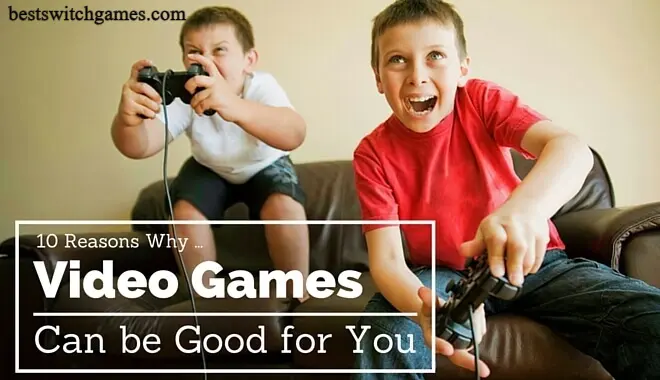
Competitive gaming appeals to people who enjoy testing their skills against other players.
Competitive games can include:
- Ranked multiplayer matches
- Fighting games
- Racing games
- Sports games
- Strategy games
- First-person shooters
- Esports competitions
Competition adds uncertainty because you cannot completely control what another player will do.
Winning can provide excitement and status, but competitive gaming can also be about improvement. Some players care less about being number one and more about reaching a personal goal, such as improving their ranking or learning a new technique.
5. Developing Skills and Mastery
Games can create opportunities to practice skills repeatedly.
Depending on the game, players may use:
- Strategic thinking
- Decision making
- Spatial awareness
- Memory
- Communication
- Teamwork
- Problem solving
- Adaptability
- Planning
- Risk assessment
The 2026 ESA report found that many U.S. adults believe video games can help develop problem-solving, teamwork and collaboration, adaptability, communication, and other skills. These findings describe players’ reported perceptions and should not be interpreted as proof that every game automatically improves every skill.
Mastery is particularly powerful because games often make progress visible. You can see your score increase, unlock a new ability, defeat a previously difficult opponent, or complete something you could not do before.
6. Exploration, Freedom, and Discovery
Some players are motivated less by winning and more by discovering what a game contains.
Open-world games are a good example. Players may explore cities, forests, planets, dungeons, oceans, or completely fictional virtual worlds.
Exploration can provide:
- Discovery
- Adventure
- Curiosity
- Freedom
- Hidden rewards
- Environmental storytelling
- Unexpected encounters
For these players, the question is not always “How quickly can I finish?”
It may simply be:
“What happens if I go over there?”
7. Creativity and Self-Expression
Games can also function as creative spaces.
Building games allow players to design structures and environments. Character creators allow players to experiment with appearance and identity. Sandbox games can give players freedom to construct their own goals rather than following a fixed path.
Creativity can also appear in strategy. Two players can approach the same problem in completely different ways.
This makes gaming different from many passive forms of entertainment because the player contributes to the experience.
8. Social Interaction and Multiplayer Gaming
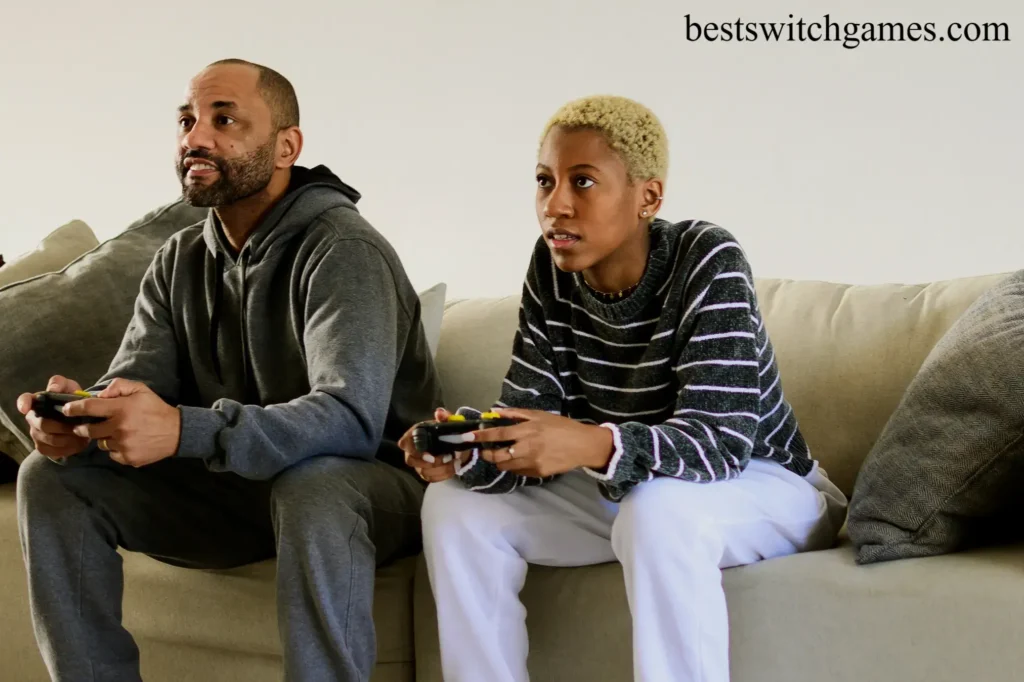
Gaming is often a social activity.
The 2026 ESA report says 49% of players surveyed said games help them stay connected to friends and family, while 47% said they had met people through games whom they otherwise would not have met.
Multiplayer gaming can involve:
- Friends playing together
- Voice chat
- Cooperative missions
- Competitive matches
- Online communities
- Guilds or clans
- Game-specific events
For some players, the game itself is only part of the attraction. The real reason they log in may be to spend time with people they know.
9. Gaming as an Escape From Routine
Games can provide temporary mental distance from everyday routines.
A player can become a detective, athlete, explorer, soldier, builder, racing driver, wizard, strategist, or completely fictional character.
This does not necessarily mean gaming is unhealthy escapism. Like reading fiction, watching movies, listening to music, or participating in hobbies, recreational gaming can simply be a way to change focus for a while.
The important distinction is whether gaming complements everyday life or begins to interfere with it.
10. Why Do People Enjoy Collecting In-Game Items?
Collecting gives players another type of goal.
Games may include:
- Characters
- Skins
- Weapons
- Cards
- Vehicles
- Cosmetics
- Achievements
- Equipment
- Virtual currency
- Rare items
Collecting can create a feeling of completion and progress.
For some people, finding a rare item is exciting because it represents time, effort, luck, knowledge, or skill.
11. Storytelling and Immersive Experiences
Modern games can combine gameplay with cinematic storytelling, music, character development, and interactive environments.
Players may become invested in fictional characters because they are not merely watching events unfold. They may be making decisions that affect what happens.
Virtual reality can take immersion even further by placing the player inside a simulated environment.
This combination of storytelling and interactivity is one reason games have become such an important form of modern entertainment.
12. Gaming Communities, Streaming, and Esports
Gaming culture extends far beyond actually playing a game.
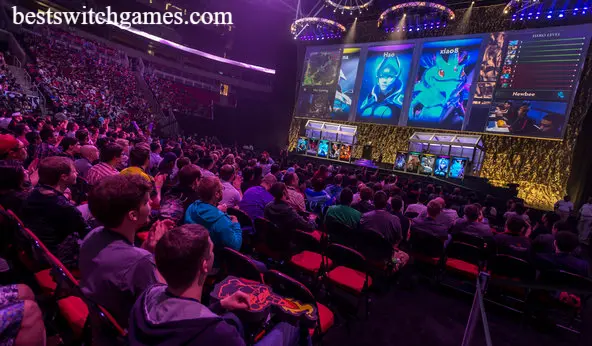
Players can watch game streaming on platforms such as Twitch and YouTube, participate in communities, follow esports competitions, create guides, make videos, or discuss new releases.
Some people even turn gaming-related skills into careers through:
- Game development
- Esports
- Streaming
- Content creation
- Journalism
- Game design
- Programming
- Art and animation
- Community management
- Video production
The gaming industry is also economically significant. The ESA reports that U.S. consumer spending on video games reached $60.7 billion in 2025.
Are Video Games Good for You?
They can be, when gaming is balanced with the rest of life.
Gaming can provide entertainment, social interaction, mental stimulation, creativity, and opportunities to practice certain skills. But the experience is not automatically positive simply because an activity is a game.
Sleep, exercise, relationships, school, work, and other responsibilities still matter.
The World Health Organization recognizes gaming disorder in ICD-11, but emphasizes that it affects only a small proportion of people who engage in gaming. The condition involves impaired control over gaming and gaming taking priority over other activities to the point of significant impairment, generally over a period of at least 12 months.
So the better question is not simply “Are video games good or bad?”
A more useful question is:
“Is my gaming habit helping me enjoy my free time without damaging other important parts of my life?”
How Gaming Motivation Changes From Person to Person
Two people can play the same game for completely different reasons.
| Player motivation | What the player may enjoy |
|---|---|
| Relaxation | Calm gameplay and stress relief |
| Competition | Winning and improving rankings |
| Achievement | Completing goals and unlocking rewards |
| Exploration | Discovering new places and secrets |
| Creativity | Building and customizing |
| Social connection | Playing with friends |
| Mastery | Learning advanced techniques |
| Storytelling | Characters and immersive worlds |
| Escape | Taking a temporary break from routine |
| Collection | Finding rare items and completing sets |
This explains why there is no universal answer to why people play video games. Gaming motivation depends on personality, age, social environment, game genre, personal goals, and the player’s current circumstances.
The Pop-Culture Meaning of “Do You Want to Play a Game”
The phrase also has a strong pop-culture connection.
The wording “I want to play a game” is famously associated with Jigsaw/John Kramer in the 2004 horror film Saw. The character uses recorded messages to introduce deadly tests and explain their rules.
A related but different phrase appears in the 1983 science-fiction film WarGames, where the computer WOPR asks, “Shall we play a game?” before the story moves toward the simulated nuclear conflict.
That distinction matters if you are searching for the origin of the phrase:
- “I want to play a game” → strongly associated with Saw
- “Shall we play a game?” → associated with WarGames
- Scream → not the primary movie source for the famous phrase
Because of its association with Saw, the phrase is also frequently used online as a horror meme, GIF caption, or dramatic joke.
Final Answer: Why Do People Want to Play Games?
People play games because games combine several powerful experiences in one activity.
They can offer fun, relaxation, excitement, challenge, competition, achievement, exploration, creativity, social interaction, and storytelling.
For one player, gaming might mean a 10-minute puzzle during a lunch break. For another, it could mean competing in an esports tournament. Someone else may simply enjoy exploring a beautiful virtual world with friends.
That variety is exactly what makes gaming so appealing.
And if someone asks, “Do you want to play a game?”, the answer depends on the context. If it is a friend asking, it could be an invitation to have fun. If it is Jigsaw asking, you may want to think twice.
Frequently Asked Questions
Do you want to play a game blog post funny?
Yes. The phrase can be used humorously in a gaming blog, meme, caption, or social post. Its dramatic association with Saw makes it especially useful when you want to create a playful horror reference.
Do you want to play a game GIF?
The phrase is commonly used with reaction GIFs and gaming or horror-themed memes. For a Saw-style reference, searches involving Jigsaw, Saw, or “I want to play a game” are more relevant than a generic gaming GIF.
Do you want to play a game movie?
The exact phrase “I want to play a game” is strongly associated with the 2004 horror film Saw and the character Jigsaw. A similar phrase, “Shall we play a game?”, appears in the 1983 science-fiction film WarGames.
My hobby is playing games essay
Playing games can be discussed as a hobby because gaming can provide entertainment, relaxation, social interaction, creativity, challenge, and opportunities for learning. A strong essay can explain both the positive aspects of gaming and the importance of maintaining healthy gaming habits.
Do you want to play a game WarGames?
If you are referring to WarGames, the famous line is “Shall we play a game?” It is spoken by Joshua/WOPR, the computer system in the 1983 film, before David Lightman chooses Global Thermonuclear War as the game.
Do you want to play a game Scream?
The phrase is not primarily associated with Scream. If you are searching for the famous horror-movie quote, Saw is the more relevant result because Jigsaw uses “I want to play a game” when introducing his tests.